Overview
NIH Distinguished Investigator
Research Areas (IRP Lab Groups)
The broad and long-term objectives of the Systemic Autoimmunity Branch are to further the understanding of the pathophysiology and clinical spectrum of systemic autoimmune diseases and to translate this knowledge into better therapies that improve outcomes for patients with these conditions. A major goal of the branch is to combine natural history or treatment studies with basic investigations into the etiology and/or pathophysiology of rheumatic diseases, including systemic lupus erythematosus (SLE) and rheumatoid arthritis (RA).
Additionally, the branch works to train the next generation of scientists and physician-scientists focused on the understanding of the pathogenesis and advancement in the treatments of patients afflicted by systemic autoimmune diseases.
Our research focuses on unraveling fundamental mechanisms underlying immunologic tolerance and understanding innate and adaptive immune pathways crucial to these autoimmune responses in SLE and other autoimmune diseases.

As treatments to suppress aberrant immune responses improve, patients with systemic autoimmunity are able to survive for longer periods of time. As a result, the prevalence of end-stage complications, including the development of accelerated atherosclerosis and myocardial infarction, has increased. We are interested in identifying the immune pathways that promote premature vascular damage in systemic autoimmunity to identify potential preventive strategies.
Current areas of interest
- The role of neutrophils and neutrophil extracellular traps (NETs) in the induction of loss of immunologic tolerance and acceleration of organ and vascular damage in autoimmune diseases.
- How type I Interferons (IFNs) contribute to the development of premature atherogenesis and vasculopathy in SLE and other connective tissue diseases.
- Alterations of immunometabolism in autoimmunity.
- The identification of novel biomarkers and therapeutic targets to mitigate cardiovascular damage and induce immunomodulation in SLE and other systemic rheumatic diseases.
Scientific Advances
Core Research Facilities
Labs at the NIAMS are supported by the following state-of-the-art facilities and services:
Staff
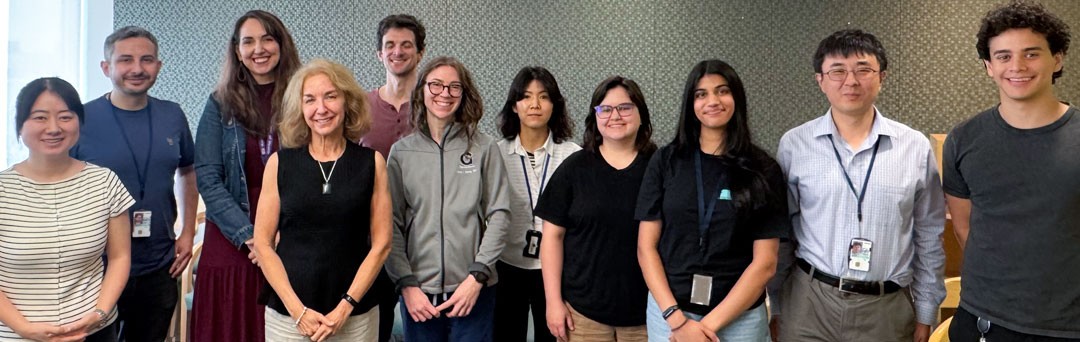
Our lab is always seeking to recruit the best talent in the scientific community. If you are interested in joining our team, please contact us.
Former Lab Members
Postdoctoral Students and Scholars
- Justin Kwong, M.D., 2024-2026 (Medicine Resident, Australia)
- Eduardo Patino-Martinez, Ph.D., 2020-2025
- Shuichiro Nakabo , M.D., PH.D., 2018-2024 (Assistant Professor, University of Kyoto, Japan)
- Mingzeng Zhang, M.D., PH.D., 2021-2022 (Postdoctoral fellow, Dana Farber Cancer Institute)
- Gustaf Wigerblad, Ph.D., 2018-2023 (Research Fellow, Genomic Technology Section, NIAMS)
- Hege Lynum Pedersen, Ph.D., 2018-2019 (Research Scientist, UiT The Artic University of Norway, Tromso, Norway)
- Jose Jiram Torres-Ruiz, M.D., 2018 (Ph.D. student, UNAM, Mexico City)
- Liam O’Neill, M.D., 2017-2019 (Rheumatologist and Clinician-Scientist, University of Manitoba, Canada)
- Yaima Lightfoot, Ph.D., 2015-2017 (Research Scientist, MD Anderson Cancer Center)
- Yudong Liu, M.D., Ph.D., 2015-2018 (Attending Physician, Peking University, China)
- Pragnesh Mistry, Ph.D., 2015-2018 (Technology Transfer and Patent Specialist, NHLBI, NIH)
- John Reynolds, MRCP, Ph.D., 2014 (Clinical Senior Lecturer in Rheumatology, University of Birmingham, UK)
- Ana Barrera, M.D., 2014-2016 (Attending Physician, Hospital ABC, Mexico City)
Postbaccalaureate Students
- Jordan Reaves, B.S. 2025-2026 (M.D., UNC Chappel Hill).
- Christopher Oliveira, B.S., 2020-2021 (M.D. Student, University of Washington)
- Alexandra Woo , B.S., 2022-2024 (M.D., Ph.D. Student, Northwestern University)
- Dillon Claybaugh, B.S., 2020-2023 (M.D. student, University of Oregon)
- Donavon Sandoval-Heglund, B.S., 2019-2020 (M.D. Student, UCSF)
- Xinghao Wang, B.S., 2018-2021 (M.D., Ph.D. student, University of Michigan)
- Rishi Goel, Sc.M., 2018-2019 (Internal Medicine Resident, Mass General)
- Phillip Carlucci, B.S., 2016-2018 (Rheumatology Fellow, NYU)
- Diana Chan, B.S., 2016-2018 (D.D.S. student, University of Washington)
- Nickie Seto, B.S., 2015-2018
- Erica Moore, B.S., 2014-2016 (M.D., Ph.D. student, Albert Einstein College of Medicine)
- Jorge Irizarry Caro, 2014-2016 (Cardiology Fellow, UT Southwestern)
- Monica Purmalek, B.A., 2014-2016 (Resident in Obstetrics and Gynecology, USUHS)
Graduate Students
- Kathleen Bashant, Ph.D., Cambridge/NIH partnership, 2016-2020 (Research Scientist, Vow, Sydney, Australia)
- Carolyne Smith, Ph.D., University of Michigan GPP program, 2010-2015 (Scientist, SQZ Biotechnologies)
Clinical Fellows
- Kathleen Vazzana, M.D., 2019-2021 (Practicing Pediatric Rheumatology at Orlando Health Arnold Palmer Hospital for Children)
Staff Scientists
- Luz Blanco Ph.D., 2013-2025
Image & Media Gallery





Clinical Trials
This is a double blind placebo-controlled study to characterize whether blocking type I IFN receptor signaling with anifrolumab will lead to improvements in vascular function, decreases in vascular inflammation and modulation of biomarkers of vascular risk in patients with systemic lupus erythematosus (SLE).
Scientific Publications
Selected Recent Publications
Key Publications
News & Highlights

Kaplan Discusses Link Between Lupus and Early Cardiovascular Disease Risk

NIAMS’ Mariana Kaplan Named NIH Distinguished Investigator
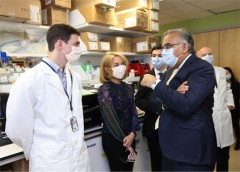
NIH and NIAMS Host Visit From White House COVID-19 Response Coordinator
A Biological Betrayal