Cutaneous Development and Carcinogenesis Section

Isaac Brownell, M.D., Ph.D.

Overview

The Cutaneous Development and Carcinogenesis Section studies the signaling pathways such as Hedgehog signaling that regulate the development and maintenance of normal skin and the changes in these signals that occur during the formation of skin cancer. 

Our investigations include studying the specification and maintenance of cell lineages in the skin, studying the regulation of stem cells in the skin, and using mouse genetics to model carcinogenesis in the skin.

A current focus for our research is investigating the neuro-cutaneous interface and the regulation of neuroendocrine cells (Merkel cells) in the skin. We are also analyzing Merkel cell carcinomas and are developing pre-clinical mouse models for this uncommon but aggressive skin cancer.

Image & Media Gallery

Career Opportunities

We are seeking outstanding, highly motivated postdoctoral fellows to join our lab. There are open positions investigating skin cancer and/or skin stem cells. We conduct basic and translational studies using mouse genetics, tissue culture, mouse xenografts, and patient samples. Multiomic high-throughput technologies are applied including FACS-seq, scRNA-seq, ChIP-seq, HiChIP, functional genomics screening, and small molecule screening. Experience with cancer biology, developmental biology, or stem cell biology preferred.

General Requirements

Applicants should have a Ph.D. or M.D. with relevant biomedical research experience; Peer-reviewed publications; Strong oral and written communication skills; Strong ability to work collaboratively and independently.

Please send a cover letter with statement of research interests, a CV with a publication list, and the contact information of three references to Dr. Brownell ([email protected]).

Scientific Publications

Selected Recent Publications

Spontaneous tumor regression and immunotherapy response demonstrate clonal T-cell expansion in Merkel cell carcinoma.

Hallaert P, Roman JW, Baker M, Hill NT, Marte JL, Gulley JL, Logemann N, Hudgens CW, Reuben A, Brownell I
NPJ Precis Oncol.
2025 Jul 1;
9(1).
doi: 10.1038/s41698-025-00987-6
PMID: 40594889

Risk of Superficial Fungal Infections in WHIM Syndrome.

Strong J, Adhanom R, Kim CS, Saito Y, Meltzer JC, Hallaert P, Martinez S, Salancy A, Kong HH, Cowen EW, Castelo-Soccio L, Murphy PM, McDermott DH, Brownell I
Dermatol Ther (Heidelb).
2025 May;
15(5).
doi: 10.1007/s13555-025-01396-0
PMID: 40178760

High-throughput screening identifies Aurora kinase B as a critical therapeutic target for Merkel cell carcinoma.

Gelb T, Garman KA, Urban D, Coxon A, Gryder B, Hill NT, Miao L, Lee T, Lee O, Chakka S, Braisted J, Jarvis JE, Glavin R, Raj TS, Xiao Y, Difilippantonio S, Wang AQ, Shen M, Cheng KC, Lal-Nag M, Hall MD, Brownell I
Nat Commun.
2025 Feb 12;
16(1).
doi: 10.1038/s41467-025-56504-7
PMID: 39939315

Merkel Cell Carcinoma.

Strong J, Hallaert P, Brownell I
Hematol Oncol Clin North Am.
2024 Oct;
38(5).
doi: 10.1016/j.hoc.2024.05.013
PMID: 39060119

POU4F3 Is Necessary for Normal Merkel Cell Formation, whereas POU4F1 Is Dispensable.

Jarvis JE, Miao L, Hallaert P, Martin MR, Collado L, Hill NT, Brownell I
J Invest Dermatol.
2025 Jan;
145(1).
doi: 10.1016/j.jid.2024.06.1284
PMID: 39009281

Mycophenolate mofetil inhibits Merkel cell carcinoma growth.

Garman KA, Thoreson N, Strong J, Hallaert P, Gelb T, Shen M, Hall MD, Brownell I
Br J Dermatol.
2024 Mar 15;
190(4).
doi: 10.1093/bjd/ljae018
PMID: 38266271

ATOH1, TFAP2B, and CEACAM6 as Immunohistochemical Markers to Distinguish Merkel Cell Carcinoma and Small Cell Lung Cancer.

Vilasi SM, Nguyen J, Wang CJ, Miao L, Daily K, Eid M, Song JS, Jiang H, Ylaya K, Busam KJ, Gaiser MR, Hewitt SM, Brownell I
Cancers (Basel).
2024 Feb 15;
16(4).
doi: 10.3390/cancers16040788
PMID: 38398178

Mycophenolate mofetil inhibits Merkel cell carcinoma growth.

Garman KA, Thoreson N, Strong J, Hallaert P, Gelb T, Shen M, Hall MD, Brownell I
Br J Dermatol.
2024 Mar 15;
190(4).
doi: 10.1093/bjd/ljae018
PMID: 38266271

Differences in Merkel Cell Carcinoma Presentation and Outcomes Among Racial and Ethnic Groups.

Mohsin N, Martin MR, Reed DJ, Vilasi SM, Miao L, Hill NT, Brownell I
JAMA Dermatol.
2023 May 1;
159(5).
doi: 10.1001/jamadermatol.2023.0061
PMID: 36920369

Distinct Signatures of Genomic Copy Number Variants Define Subgroups of Merkel Cell Carcinoma Tumors.

Hill NT, Kim D, Busam KJ, Chu EY, Green C, Brownell I
Cancers (Basel).
2021 Mar 6;
13(5).
doi: 10.3390/cancers13051134
PMID: 33800889

Robust Production of Merkel Cell Polyomavirus Oncogene Specific T Cells From Healthy Donors for Adoptive Transfer.

Davies SI, Barrett J, Wong S, Chang MJ, Muranski PJ, Brownell I
Front Immunol.
2020;
11().
doi: 10.3389/fimmu.2020.592721
PMID: 33362774

Avelumab in patients with previously treated metastatic Merkel cell carcinoma: long-term data and biomarker analyses from the single-arm phase 2 JAVELIN Merkel 200 trial.

D'Angelo SP, Bhatia S, Brohl AS, Hamid O, Mehnert JM, Terheyden P, Shih KC, Brownell I, Lebbé C, Lewis KD, Linette GP, Milella M, Georges S, Shah P, Ellers-Lenz B, Bajars M, Güzel G, Nghiem PT
J Immunother Cancer.
2020 May;
8(1).
doi: 10.1136/jitc-2020-000674
PMID: 32414862

Key Publications

High-throughput screening identifies Aurora kinase B as a critical therapeutic target for Merkel cell carcinoma. 

Gelb T, Garman KA, Urban D, Coxon A, Gryder B, Hill NT, Miao L, Lee T, Lee O, Chakka S, Braisted J, Jarvis JE, Glavin R, Raj TS, Xiao Y, Difilippantonio S, Wang AQ, Shen M, Cheng KC, Lal-Nag M, Hall MD, Brownell I
Nat Commun.
2025 Feb 12;
16(1).
doi: 10.1038/s41467-025-56504-7
PMID: 39939315

Genetic Risk Factors for Early-Onset Merkel Cell Carcinoma. 

Mohsin N, Hunt D, Yan J, Jabbour AJ, Nghiem P, Choi J, Zhang Y, Freeman AF, Bergerson JRE, Dell'Orso S, Lachance K, Kulikauskas R, Collado L, Cao W, Lack J, Similuk M, Seifert BA, Ghosh R, Walkiewicz MA, Brownell I
JAMA Dermatol.
2024 Feb 1;
160(2).
doi: 10.1001/jamadermatol.2023.5362
PMID: 38170500

Society for Immunotherapy of Cancer (SITC) clinical practice guideline on immunotherapy for the treatment of nonmelanoma skin cancer. 

Silk AW, Barker CA, Bhatia S, Bollin KB, Chandra S, Eroglu Z, Gastman BR, Kendra KL, Kluger H, Lipson EJ, Madden K, Miller DM, Nghiem P, Pavlick AC, Puzanov I, Rabinowits G, Ruiz ES, Sondak VK, Tavss EA, Tetzlaff MT, Brownell I
J Immunother Cancer.
2022 Jul;
10(7).
doi: 10.1136/jitc-2021-004434
PMID: 35902131

The biology and treatment of Merkel cell carcinoma: current understanding and research priorities. 

Harms PW, Harms KL, Moore PS, DeCaprio JA, Nghiem P, Wong MKK, Brownell I, International Workshop on Merkel Cell Carcinoma Research (IWMCC) Working Group
Nat Rev Clin Oncol.
2018 Dec;
15(12).
doi: 10.1038/s41571-018-0103-2
PMID: 30287935

Avelumab in patients with chemotherapy-refractory metastatic Merkel cell carcinoma: a multicentre, single-group, open-label, phase 2 trial. 

Kaufman HL, Russell J, Hamid O, Bhatia S, Terheyden P, D'Angelo SP, Shih KC, Lebbé C, Linette GP, Milella M, Brownell I, Lewis KD, Lorch JH, Chin K, Mahnke L, von Heydebreck A, Cuillerot JM, Nghiem P
Lancet Oncol.
2016 Oct;
17(10).
doi: 10.1016/S1470-2045(16)30364-3
PMID: 27592805

A Cascade of Wnt, Eda, and Shh Signaling Is Essential for Touch Dome Merkel Cell Development. 

Xiao Y, Thoresen DT, Miao L, Williams JS, Wang C, Atit RP, Wong SY, Brownell I
PLoS Genet.
2016 Jul;
12(7).
doi: 10.1371/journal.pgen.1006150
PMID: 27414798

Neural Hedgehog signaling maintains stem cell renewal in the sensory touch dome epithelium. 

Xiao Y, Thoresen DT, Williams JS, Wang C, Perna J, Petrova R, Brownell I
Proc Natl Acad Sci U S A.
2015 Jun 9;
112(23).
doi: 10.1073/pnas.1504177112
PMID: 26015562

News & Highlights

Spotlight on Research |

NIH Researchers Survey the Genetic Diversity of Skin Microbes in Eczema Patients
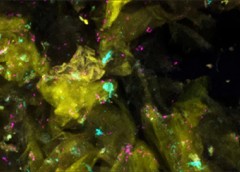
Using a combination of sequencing techniques, researchers from NIAMS and the National Human Genome Research Institute (NHGRI) surveyed the skin microbiome of patients with atopic dermatitis (AD, also called eczema) to understand the genetic diversity of the bacteria present on the skin and how genetic variants may contribute to disease severity.
NIH Director's Blog |

NIH Director's Blog

Human skin is home to diverse ecosystems including bacteria, viruses, and fungi. These microbial communities comprise hundreds of species and are collectively known as the skin microbiome.
NIAMS-Related Article |

Drs. Heidi Kong and Ian Myles — Derm Germs: The Human Skin Microbiome

Dr. Heidi Kong uses genomics to uncover the microbe-host interactions taking place all over our skin.
Last Updated: February 2026