


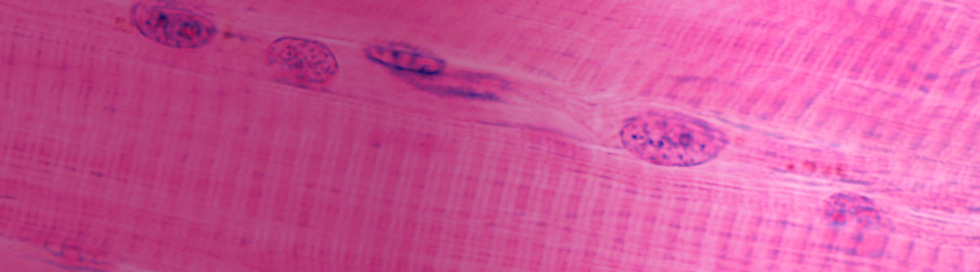
Learn how the Centers promote collaborative research on muscular dystrophy.
Overview
The Centers of Excellence program in muscular dystrophy research was established by NIH in 2003, in honor of the late Senator Paul D. Wellstone of Minnesota in response to provisions in the Muscular Dystrophy Community Assistance, Research, and Education Amendments of 2001 (the MD-CARE Act, Public Law 107-84).
The Wellstone Centers seek to promote collaborative basic, translational, and clinical research and provide important resources that can be used by muscular dystrophy researchers. The Centers are supported by five-year, renewable grants.
Participating NIH Institutes
The following NIH Institutes participate in the Wellstone Centers Program:
- National Institute of Arthritis and Musculoskeletal and Skin Diseases (NIAMS)
- Eunice Kennedy Shriver National Institute of Child Health & Human Development (NICHD)
- National Institute of Neurological Disorders and Stroke (NINDS)
- National Heart, Lung, and Blood Institute (NHLBI)
Research Areas
Each Center has at least one core facility that shares its services or resources with the muscular dystrophy research community, nationwide. These Centers serve as focal points for research collaborations, training, and communication. Center investigators participate in community outreach efforts to increase awareness of their research activities in the patient and advocacy communities and incorporate community perspectives into the conduct of patient-centered research.
Collectively the Centers are engaged in research on:
- Duchenne/Becker
- myotonic
- facioscapulohumeral
- limb-girdle
- congenital
- other forms of muscular dystrophy
They are exploring promising approaches for treatment of these diseases including:
- gene
- stem cell
- small molecule drugs
- biological
- molecular genetic therapies