


Contact Information
Summary
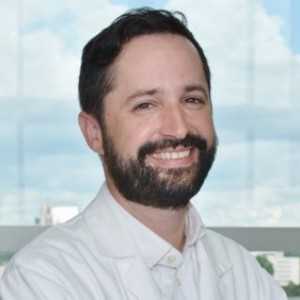
Peter Grayson, M.D., M.Sc., is a senior investigator at the National Institute of Arthritis and Musculoskeletal and Skin Diseases (NIAMS). He completed his undergraduate degree from Brown University in 1999, his medical degree from the Medical University of South Carolina in 2004, and his master's in science from Boston University in 2008. He served as a chief resident in Internal Medicine at Boston Medical Center and completed an additional two-year vasculitis fellowship within the Vasculitis Clinical Research Consortium.
Dr. Grayson is firmly committed to mentoring young investigators in rare disease research. He serves as the acting program director for the NIAMS Rheumatology Fellowship Program and is the recipient of numerous teaching awards. He received the American College of Rheumatology's Distinguished Fellow Award in 2011 and was elected into the American Society for Clinical Investigation in 2024.
Research Statement
Dr. Grayson's research focuses on understanding the molecular mechanisms that drive systemic inflammatory diseases, with particular emphasis on clonal mechanisms of hematoinflammation and systemic vasculitis. His work integrates clinical investigation with genetics and genomics, biomarker discovery, advanced molecular imaging, molecular classification of disease, and clinical trials to identify disease mechanisms and translate these discoveries into improved diagnosis and treatment.
A major focus of his research is deciphering how somatic mutations and clonal hematopoiesis give rise to inflammatory disease. His group co-discovered VEXAS syndrome in 2020, establishing somatic mutations in UBA1 in myeloid cells as a cause of severe adult-onset systemic inflammation and providing a paradigm for genetically defined hematoinflammatory disease. Building on this work, his group investigates how acquired mutations in hematopoietic cells alter inflammatory pathways, shape clinical phenotypes, and contribute to diseases that intersect rheumatology, hematology, and immunology. Extending these concepts beyond the myeloid compartment, his group has also identified previously unrecognized clonal populations of T lymphocytes associated with aneurysmal vasculitis.
Complementary work from the group has defined novel pathways of neutrophil-mediated inflammation in monogenic and drug-induced vasculitis and identified biomarkers of disease activity across multiple forms of vasculitis that suggest new therapeutic targets. His group has also helped establish advanced molecular imaging as a surrogate marker of vascular inflammation in large-vessel vasculitis. Collectively, this research aims to move beyond phenotype-based classification of inflammatory diseases toward a molecular understanding of disease rooted in causal genetic, clonal, and immune mechanisms.