


Information on this page is mapped to national science and health education standards and is for students in grades 4 through 6 who are learning about the human body. Teachers may also use these resources to inform their lesson plans.
On This Page
- For Students: Find all classroom materials and activities about skin
- Kahoot! Quiz: Test your knowledge about skin on your own or as a class!
- Vocabulary: See all of the medical terms in this lesson defined
- Teacher's Corner: See the National Education Standards covered in these lessons
For Students
Have you ever wondered how scrapes heal or why you need to wear sunscreen? The answer has to do with the biggest organ of your body: your skin! You may not think about your skin very often, but it helps your body do many things. On this page, you can learn about skin, what happens when it gets hurt, and how to keep it healthy.
What is skin?

Skin is the biggest organ of your body. An organ is a part of the body that has a specific job. Skin does a lot to keep your body healthy. It:
- Covers and protects you.
- Fights dangerous germs and stops them from getting inside the body.
- Makes melanin, the molecule that gives your skin color and helps protect the skin from the sun’s harmful rays.
- Helps keep your body at the right temperature.
- Prevents dehydration by keeping fluids inside the body.
- Gives you a sense of touch, allowing you to sense texture, pressure, and temperature.
- Makes vitamin D to help keep bones strong.
- Contains hair follicles (FAA-luh-klz), which grow hair and help repair wounds.
Activity
Think back…… Can you remember a time when your skin did one of these things for you? Draw a picture of that memory!
What is skin made of?

Like all organs in your body, skin is made of different types of cells. Cells are the smallest building blocks of life. Your body is made of trillions of cells.
Cells are very small – much smaller than a grain of rice. To better understand how tiny cells are, click here and drag the scroll bar to the right.
Skin is organized into three main layers:

- The epidermis (eh-puh-DUR-muhs) is the part of the skin you can see. At the bottom of the epidermis, where you can’t see, new skin cells are forming to replace old ones that flake off.
- The dermis (DUR-muhs) is the next layer down, hidden under your epidermis. This layer of skin has blood vessels, nerve endings, and oil and sweat glands.
- The hypodermis (hai-pow-DUR-muhs) is the deepest layer of skin. It helps you store energy and connects your skin to your muscles and bones.
The skin contains many different types of cells that work together. For example, there are:
- Immune (uh-MYOON) cells that fight germs.
- Eccrine (EH-kruhn) cells that make sweat to cool your body down when it’s hot.
- Nerve (nurv) cells that send messages to your brain to give you a sense of touch.
Did You Know?
Your skin has billions of microbes on it! Microbes (MAI-krowbz) are very tiny living things found all around us as well as in and on our bodies. There are microbes that live on our skin all the time! These microbes are not like the germs that cause disease – they don’t hurt us, and sometimes they even help us!
Activity
Try this! Put two tomatoes that are about the same size on a tray. Use a toothpick to poke five holes in one tomato, but not the other. Watch the tomatoes every day for 1 week and write down any differences you notice in color, smell, texture, and shape. How is a tomato protected by its skin?
What happens when skin gets hurt?
If something sharp, rough, or very hot touches your skin, you might get a cut, scrape, burn, or other injury. The good news is that your body knows how to respond to injuries. It sends special blood cells called platelets (PLAYT-luhts) to the damaged area. The blood cells stick together to make a clot, which covers the injury like a natural bandage.
As the body sends more blood cells and new skin cells to the injury, the clot keeps them from flowing out. When the clot dries out, it’s called a scab. Scabs are really helpful! They keep germs out and keep your injury covered as the skin heals.
As you heal, your body grows new skin cells to replace the damaged ones. If the injury goes deep enough, the healing process leaves a mark on the skin called a scar.
Did You Know?
Bruises happen when cuts or bumps break open veins under the skin. Veins carry blood, so when they break, the red blood cells leak out and pool under the skin, creating a bruise.
As you heal, a pigment in the blood called hemoglobin (hee-muh-GLOW-bn) breaks down, and the bruise changes color. Most of the time, bruises change from red or purple to black and blue to greenish yellow and finally fade to your normal skin color.
Activity
Do you or does someone you know have a bruise? Take pictures of it every day until it heals. Then go back through the pictures and watch as it changes color!
What skin conditions can kids get?
Eczema

Eczema (EG-zuh-muh) is a condition that makes skin dry, red, and itchy in some places. About 1 in 10 kids have it! Scientists don’t know exactly what causes eczema. It might have to do with how your body reacts to things in the environment. Some kinds of clothes, soap, dust, plants, pet fur, or even weather can trigger an eczema rash.
Skin doctors known as dermatologists (dur-muh-TAA-luh-juhsts) can help people with eczema feel better by recommending different types of treatments, such as creams, pills, or shots, to make the skin less red and itchy.
Acne

Many tweens and teens get a skin condition called acne, which can lead to painful pimples. Acne is caused by a type of bacteria that lives on everyone’s skin called Propionibacterium acnes (proh-pee-OH-nee-bak-TEE-ree-uhm AK-nees). Sometimes, follicles (FAA-luh-klz) – the places where hair grows out of the skin – get clogged with oil and dead skin cells. Bacteria move into the clogged area, making it swollen, painful, and eventually causing a pimple.
MYTH BUSTED!
Sometimes people say that chocolate, greasy foods, or even stress cause acne, but this is not true.
You may feel embarrassed when you have a pimple, but it’s a normal part of growing up that most people experience. Sometimes people are tempted to pop a pimple to get rid of it, but this is a bad idea. Popping pimples sometimes pushes bacteria deeper into the skin, causing pain and swelling, and it can even cause permanent scars.
If you’re worried or have very painful acne, ask your parents or caregiver about seeing a doctor or a dermatologist.
Warts
Warts are small hard growths on the skin, most commonly found on the hands, fingers, feet, and face. Around 1 in 5 kids will get warts!
People get warts when they are infected with a virus from the human papillomavirus (pa-puh-LOW-muh-vai-ruhs) family. The virus makes the skin grow extra cells, which makes the outer layer of skin thick and hard in a certain spot.
Warts can spread to different places on the body of the same person, or to other people. Most of the time, warts are harmless and go away by themselves.
How can I help keep my skin healthy?
Keep your skin clean and hydrated.
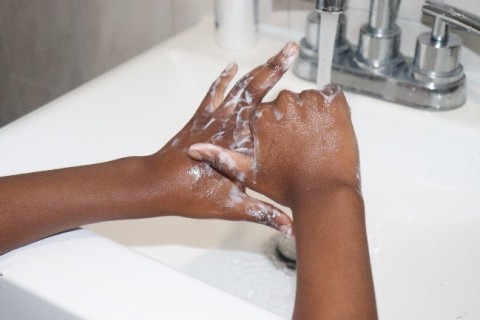
Washing your skin, especially your hands, is very important to keep it healthy. Hand washing keeps you from spreading germs to other parts of your body. It also keeps you from spreading germs that could give others a cold or the flu.
Activity
Think Like a Scientist! Kid scientist Alicia wants to figure out the best way to wash hands. Help her out by doing this experiment at home!
Your skin needs moisture. To help your skin stay hydrated, drink plenty of water, use a lotion or moisturizer, avoid taking showers and baths that are too hot, wear lip balm, or use a humidifier (a device that adds moisture to the air).
Protect your skin from the sun.
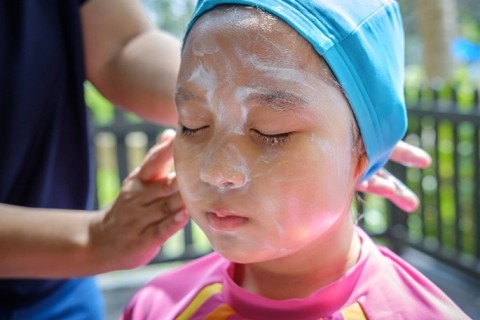
Melanin (MEH-luh-nuhn) – the pigment that gives skin color – provides some protection by absorbing the sun’s harmful rays, but it doesn’t protect the skin completely. Too much sun can damage your skin, no matter how light or dark your skin is.
Stay in the shade when the sun is the strongest during the day. Whenever you are outside, wear sunscreen with a sun protection factor (SPF) of 30 or higher. If there are spots you can’t reach, ask a friend or family member to help. Remember to put sunscreen on every 2 hours. You can also wear protective clothing, like swim shirts or long sleeves and hats, while you are in the sun.
Did You Know?
People who tan in the sun do so because sunlight causes the skin to produce more melanin and darken. As old skin cells die and new ones replace them, the tan fades.
Activity
Place a thermometer outside in the sun for 10 minutes where there is no shade. Place another thermometer in a shaded area, such as under a tree, for 10 minutes. Record the temperatures in both places and compare them. Why is it important to think about high-heat situations and the importance of shade, cooling stations, applying sunscreen, wearing protective clothing like hats, and staying hydrated?
Avoid skin injuries.
- Gear up when you get active to protect your skin from injuries! Wear a helmet, knee pads, and elbow pads during sports. Make sure you know the right way to put on your safety gear.
- Stay safe in the kitchen. Ask an adult to help you use sharp kitchen tools, like blenders and knives. Always use potholders and oven mitts when touching hot pots, pans, and baking sheets. Make sure you know how to use these tools safely before using them by yourself.
- Wear the right clothes for the weather. Sometimes, when skin is exposed to really cold temperatures, it can freeze and get damaged. This is called frostbite. Wear heavy, warm clothes in cold weather to protect yourself from frostbite. Wear long sleeves and pants in the woods or other areas with tall plants to protect yourself from bug bites.
Take care of skin injuries so they can heal properly.
If you get a cut or scratch, clean it right away with soap and warm water and put on a bandage to protect it while it heals. This keeps dirt and germs from getting into the wound and causing an infection.
Think you might have been stung by a bee or a wasp? Tell an adult right away. They can help figure out whether you can treat the sting at home or need to go to the doctor. If you get a bug bite, try not to scratch it. You could accidentally create a cut and damage your skin more!
If you get a minor burn – that turns red but does not blister – start by running it under cold water for 5 minutes. Cover the burn with a clean bandage and wash the area gently with soap and water.
If your cut, sting, or burn is really bad, go to the doctor right away to get help.
Go to the doctor regularly for check-ups.
Ask your doctor any questions you have about your skin.
If you notice something weird on your skin, like a mole that changes size or color, or a red, itchy patch, ask a parent, caregiver, or other trusted adult to look at it and schedule a doctor’s appointment.
Depending on what’s going on, your regular doctor might recommend that you see a dermatologist.
Test your knowledge about skin with this Kahoot! quiz

This Kahoot! quiz tests your knowledge about skin and how to keep them healthy.
Vocabulary
Cells. The smallest building blocks of life. Your body is made of trillions of cells!
Dermatologist (dur-muh-TAA-luh-juhst). A doctor that specializes in treating the skin.
Dermis (DUR-muhs). The layer of skin under the epidermis that has blood vessels, nerve endings, and oil and sweat glands.
Eccrine (EH-kruhn) cells. Cells that make sweat to cool your body down when it’s hot.
Eczema (EG-zuh-muh). A condition that makes skin dry, red, and itchy in some places.
Epidermis (eh-puh-DUR-muhs). The part of the skin you can see, where new skin cells form to replace old ones that flake off.
Follicles (FAA-luh-klz). The places where hair grows out of the skin.
Hemoglobin (hee-muh-GLOW-bn). The colorful molecule (pigment) that makes the blood red and helps it carry oxygen.
Human papillomavirus (pa-puh-LOW-muh-vai-ruhs). A virus that can cause warts.
Hypodermis (hai-pow-DUR-muhs). The deepest layer of skin that helps you store energy and connects your skin to your muscles and bones.
Immune (uh-MYOON) cells. Cells that fight germs.
Melanin (MEH-luh-nuhn). The colorful molecule (pigment) that gives skin color.
Microbes (MAI-krowbz). Very tiny living things that are found all around us as well as in and on our bodies.
Nerve (nurv) cells. Cells that send messages to your brain. Special types of nerve cells give you a sense of touch.
Pigment (PIG-muhnt). A substance made by a plant or animal that produces a characteristic color.
Platelets (PLAYT-luhts). Special blood cells that stick together (form clots) to stop bleeding.
Propionibacterium acnes (proh-pee-OH-nee-bak-TEE-ree-uhm AK-nees). The bacteria that causes acne when it moves into clogged pores.
Sun protection factor (SPF). A measurement for how well sunscreen protects skin from sun damage.
Vitamin D. A nutrient that the skin makes to help keep bones strong.
Teacher’s Corner
The content on this NIAMS webpage aligns with the following national standards:
Next Generation Science Standards
- NGSS Standard 4-LS1-1 “Animals have internal and external structures that serve various functions in growth, survival, behavior, and reproduction.”
- NGSS Standard 4-LS1-2 “Different sense receptors are specialized for particular types of information, which may be then processed by the animal’s brain.”
- NGSS MS-LS1-1 “All living things are made up of cells, which are the smallest units that can be said to be alive. An organism may consist of one single cell (unicellular) or many different numbers and types of cells (multicellular).”
- NGSS MS-LS1-3 “In multicellular organisms, the body is a system of multiple interacting subsystems. These subsystems are groups of cells that work together to form tissues and organs that are specialized for particular body functions.”
National Health Education Standards
- NHES 2.5.2 “Identify the influence of culture on health practices and behaviors.”
- NHES 1.5.5 “Describe when it is important to seek health care.”
- NHES 1.5.1 “Describe the relationship between healthy behaviors and personal health.”
- NHES 1.5.4 “Describe ways to prevent common childhood/adolescent injuries and health problems.”
CDC Healthy Schools
- CDC Characteristics of an Effective Health Education Curriculum, Characteristic 4: “Address social pressures and influences”