


Overview
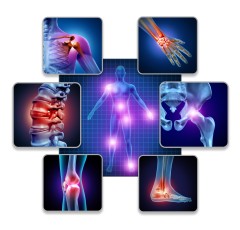
Many of the diseases within the NIAMS research mission cause pain, disability, or disfigurement. Pain, both acute and chronic, can significantly impact mobility and quality of life. However, critical knowledge gaps remain, including: the mechanisms of pain; the outcome measures, biomarkers, and treatment options that can prevent or alleviate pain; and measures that can improve health in populations suffering from pain.
NIAMS’ Work with the NIH HEAL Initiative

To fill these gaps, NIAMS continues to work closely with the National Institutes of Health Helping to End Addiction Long-term® Initiative, or NIH HEAL Initiative®. NIAMS has played a leading role in the HEAL-supported Back Pain Consortium Research (BACPAC) Program, which seeks to develop effective and personalized therapies for chronic low back pain. In the summer of 2023, the Consortium published a series of research papers discussing the ongoing back pain research that it is conducting. In 2022, NIAMS helped to launch the HEAL-supported Restoring Joint Health and Function to Reduce Pain (RE-JOIN) Consortium, which seeks to expand our understanding of pain signals in joints to help reduce pain, limit joint deterioration, and restore healthy joints, with an initial focus on the knee and temporomandibular (or jaw) joints.
NIAMS Administrative Supplement and Competing Revision Funding for Pain Research and Training
To further advance pain research, in 2023 the institute called for administrative supplement and competing revision applications to existing NIAMS-funded awards to accelerate research into the underlying mechanisms of pain and to advance cutting-edge pain research into rheumatic, skin, and musculoskeletal diseases (see NOT-AR-23-015 and NOT-AR-23-016 for further information). NIAMS funded 31 awards, totaling more than $5 million. These awards – which span the broad array of diseases and conditions contained within the NIAMS portfolio – include the following:
- In a current clinical trial for those with Chikungunya virus chronic arthritis, conducted in an understudied Latino population, the funded supplement aims to better understand and quantify pain as well as gather data with tissue-based analysis to determine the associated pathways and genes that may play a role. More information
- In heterotopic ossification (which is the presence of bone in soft tissue that can affect people who experience trauma), exploring the interaction between tissue damage and pain mechanisms using several cutting-edge techniques, like single cell RNA sequencing and spatial transcriptomics. More information
- For those with anterior cruciate ligament (ACL) injuries, applying a multi-modal approach to investigating pain within the first year after injury, including patient-reported outcomes, and advanced brain and knee magnetic resonance imaging (MRI). The techniques will be evaluated for detecting early cartilage degeneration in patients at risk for osteoarthritis (OA) and will help to diagnose OA earlier, which could lead to prevention strategies and better prognoses for OA and other diseases. More information
- For the prevention of chronic post-surgical pain after spine surgery, examining the relationship between social determinants of health (which are the conditions in the environments where people live and work that affect a person’s health and quality of life) and genetics in a randomized controlled trial comparing Acceptance and Commitment Therapy with treatment as usual. More information
- For those with OA, investigating the role of increased intestinal permeability (which is when the intestinal barrier allows substances other than water and nutrients, such as bacteria or other pathogens, to pass into the bloodstream) in the development and worsening of OA at multiple joint sites in both humans and pet dogs. The study will look for novel biomarkers relevant to the pain experience in humans and dogs and use these experiences to characterize pain-related OA phenotypes in relation to both in the gut microbiome. More information
- Expanding a study into hidradenitis suppurativa – a common, chronic inflammatory skin disease that causes severe pain, and can lead to poor quality of life, chronic opioid use, and elevated suicide risk to include adolescents and incorporate parent and family perspectives for designing future studies in adolescents. More information

- In people with inflammatory joint diseases, who often experience significant joint pain, seeking to better understand the role of immune cells in pain progression and developing potential immunoregulation-based strategies for durable pain control. More information
- Providing additional support and increased opportunities for training focused on the study of the mechanisms, measurement, and treatment of pain in rheumatic diseases for a university's Scientist Training in Rheumatology Research program. More information
The full list of awards illustrates the breadth and depth of the enhanced pain research and training opportunities funded under this effort. Browse them below.
Supplemented NIAMS Pain Research Grants
Supplemented NIAMS Research Training Grants (T32)
| GRANTEE | INSTITUTION | PROJECT TITLE |
|---|---|---|
| Hani A. Awad | University of Rochester | Training in Musculoskeletal Science: Comprehensive Training in Pain Studies |
| Alexei A. Grom | Cincinnati Children's Hospital Medical Center | Cincinnati Training Program in Pediatric Rheumatology Research |
| Jason Knight | University of Michigan at Ann Arbor | Scientist Training in Rheumatology Research |
| Suzanne A. Maher | Hospital for Special Surgery | Admin Supplement: Combined Engineering and Orthopaedics Training Program |
| Louis J. Soslowsky | University of Pennsylvania | Training Program in Musculoskeletal Research |
| Michael J. Zuscik | University of Colorado Denver | Interdisciplinary Training in Musculoskeletal Research |